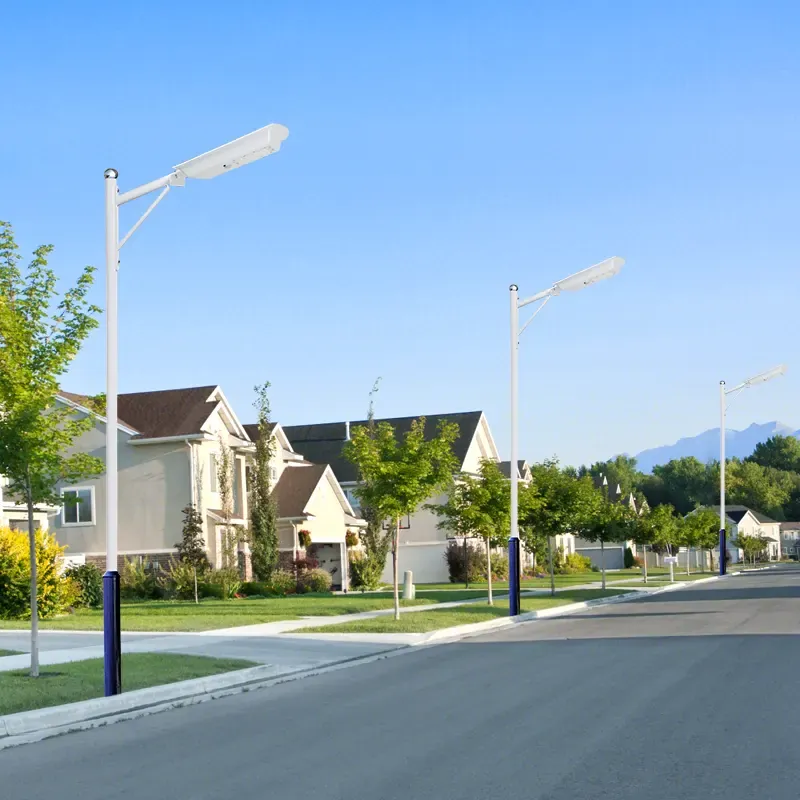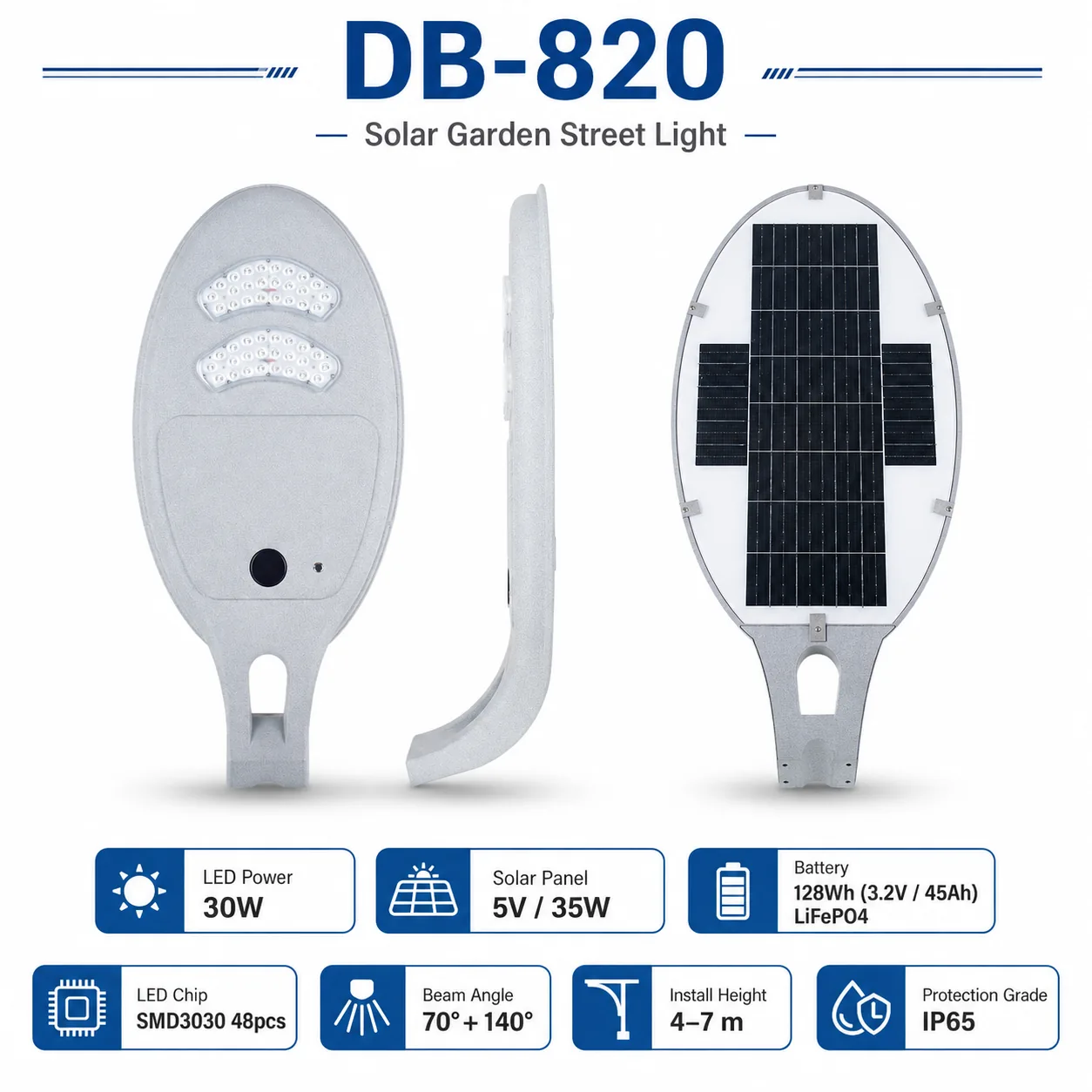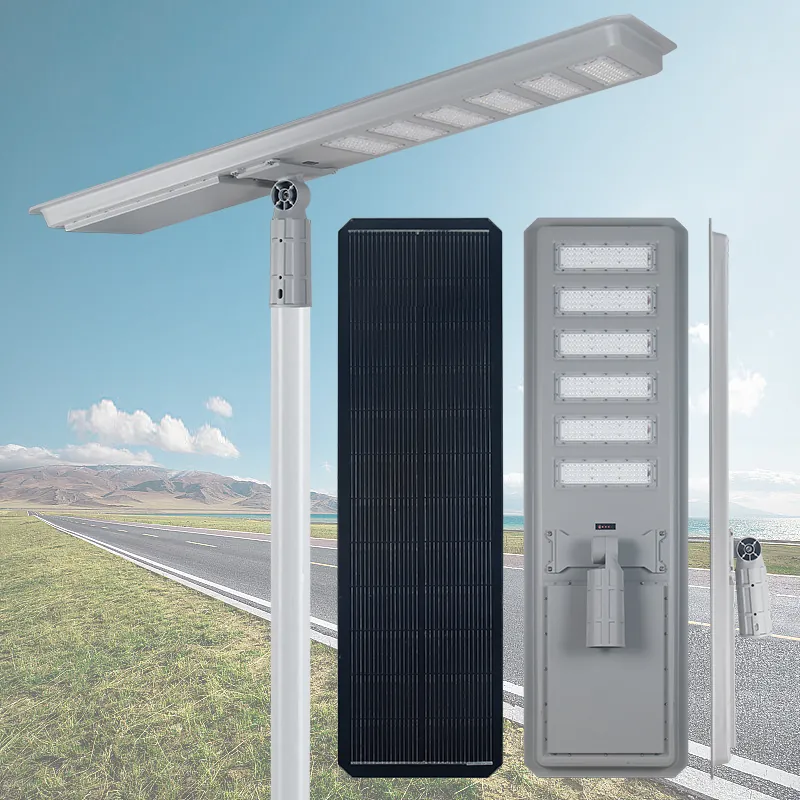

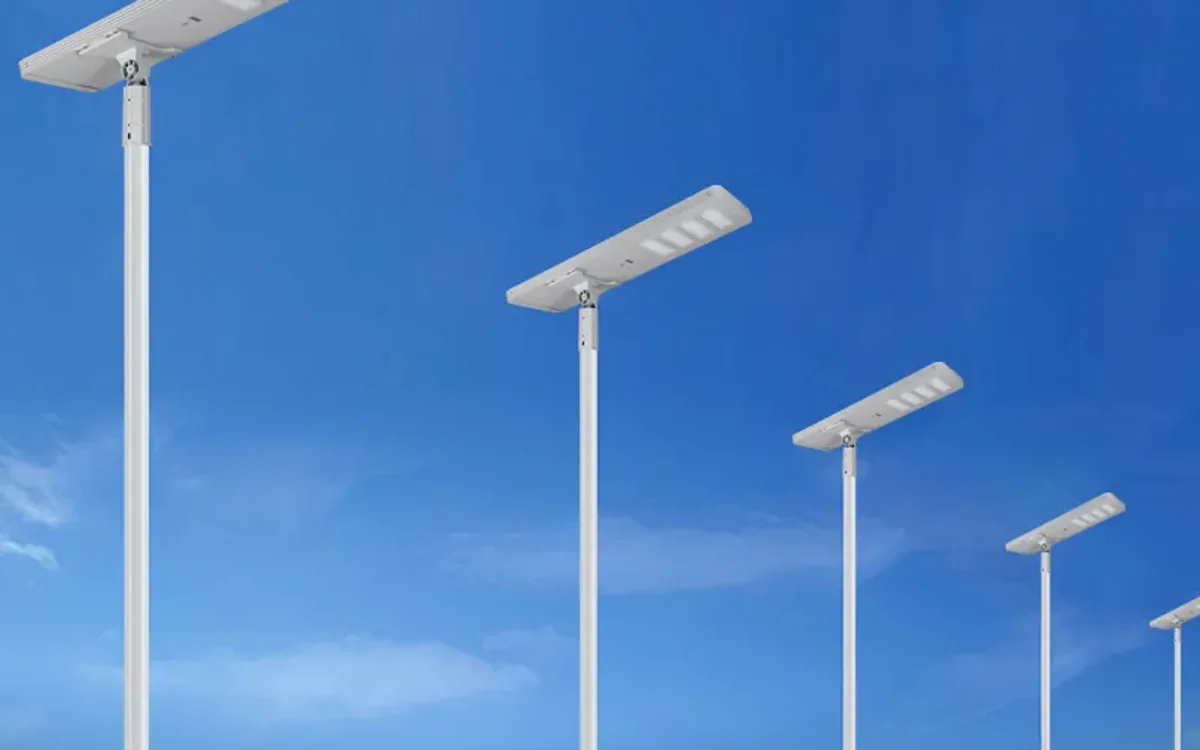
Every solar street light project eventually reaches the same fork in the road: do you mount everything on the pole as a single integrated unit, or do you separate the panel from the luminaire and run cable between them?
Both are in production here — 33 all-in-one models and 9 split models — and both are correct answers to different questions. This article is about working out which question you are actually asking.
The two architectures, in one paragraph each
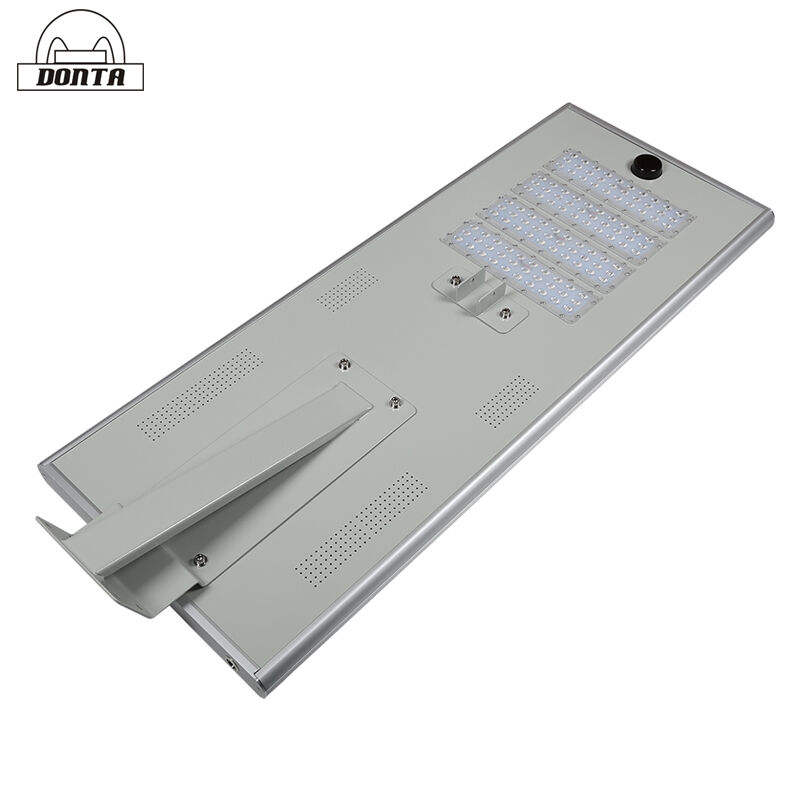
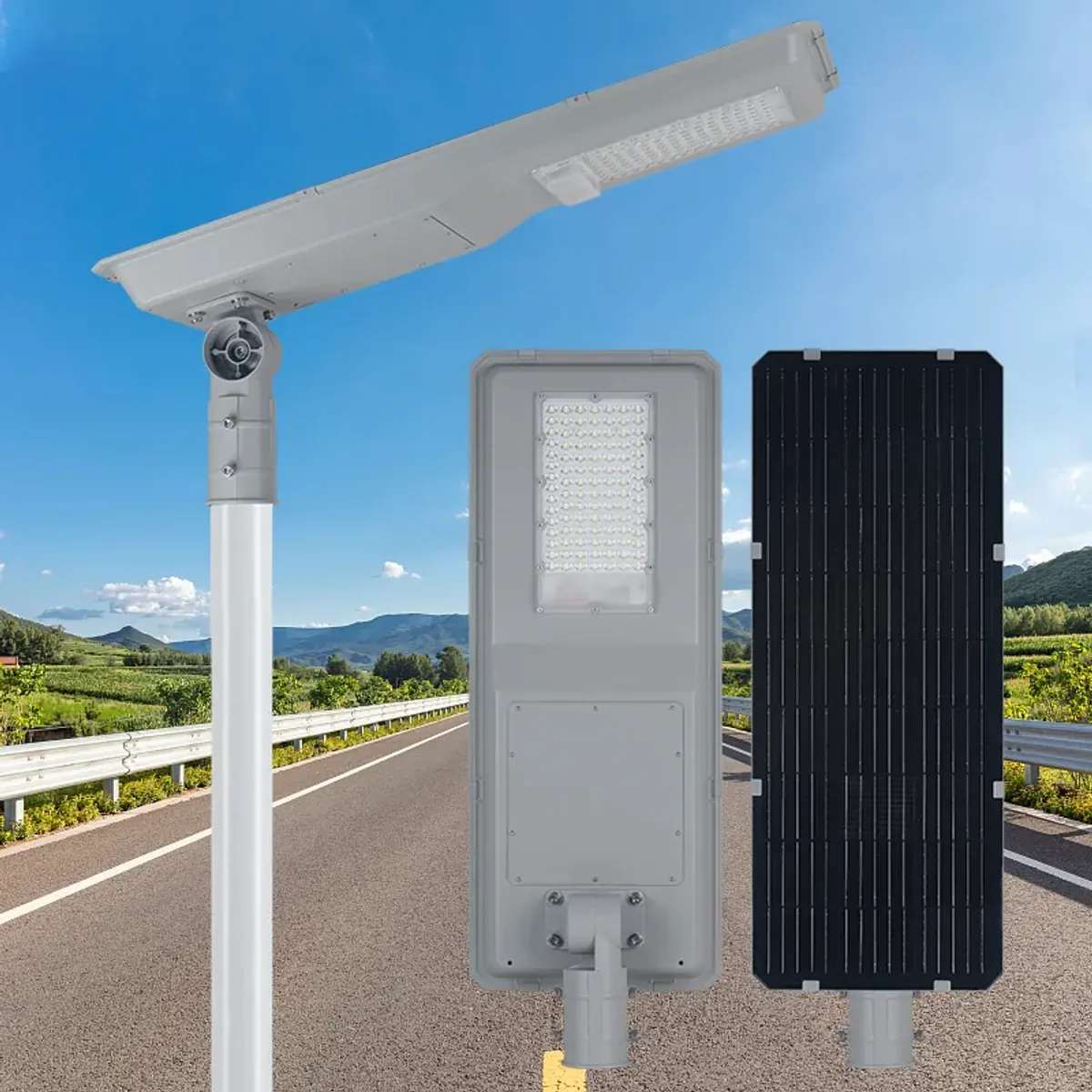
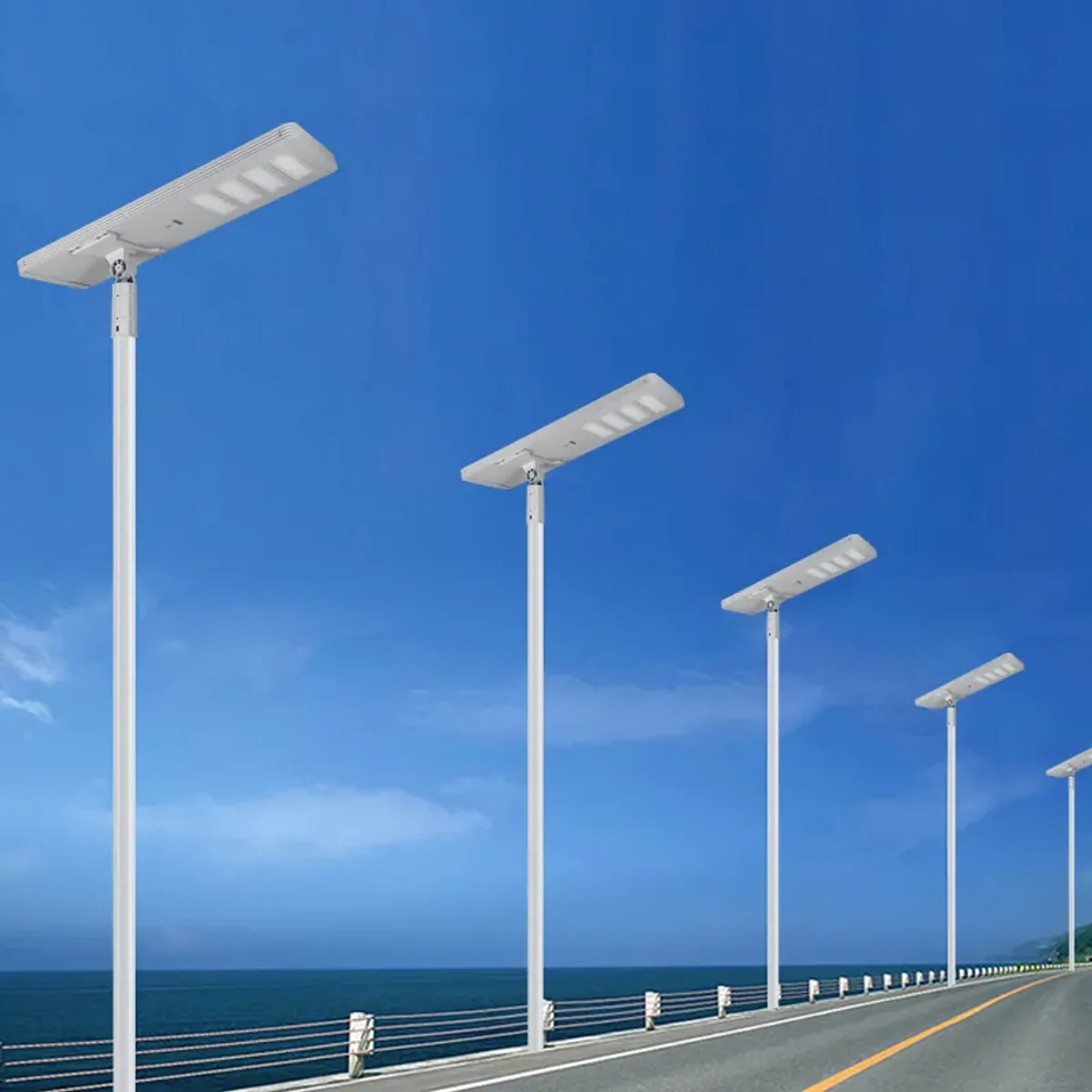
An all-in-one fixture puts the solar panel, LiFePO4 battery, MPPT charge controller and LED module inside a single die-cast aluminium housing. The whole thing mounts on a standard pole tenon with four bolts. There is no external battery box, no trenching, and no electrician on site.
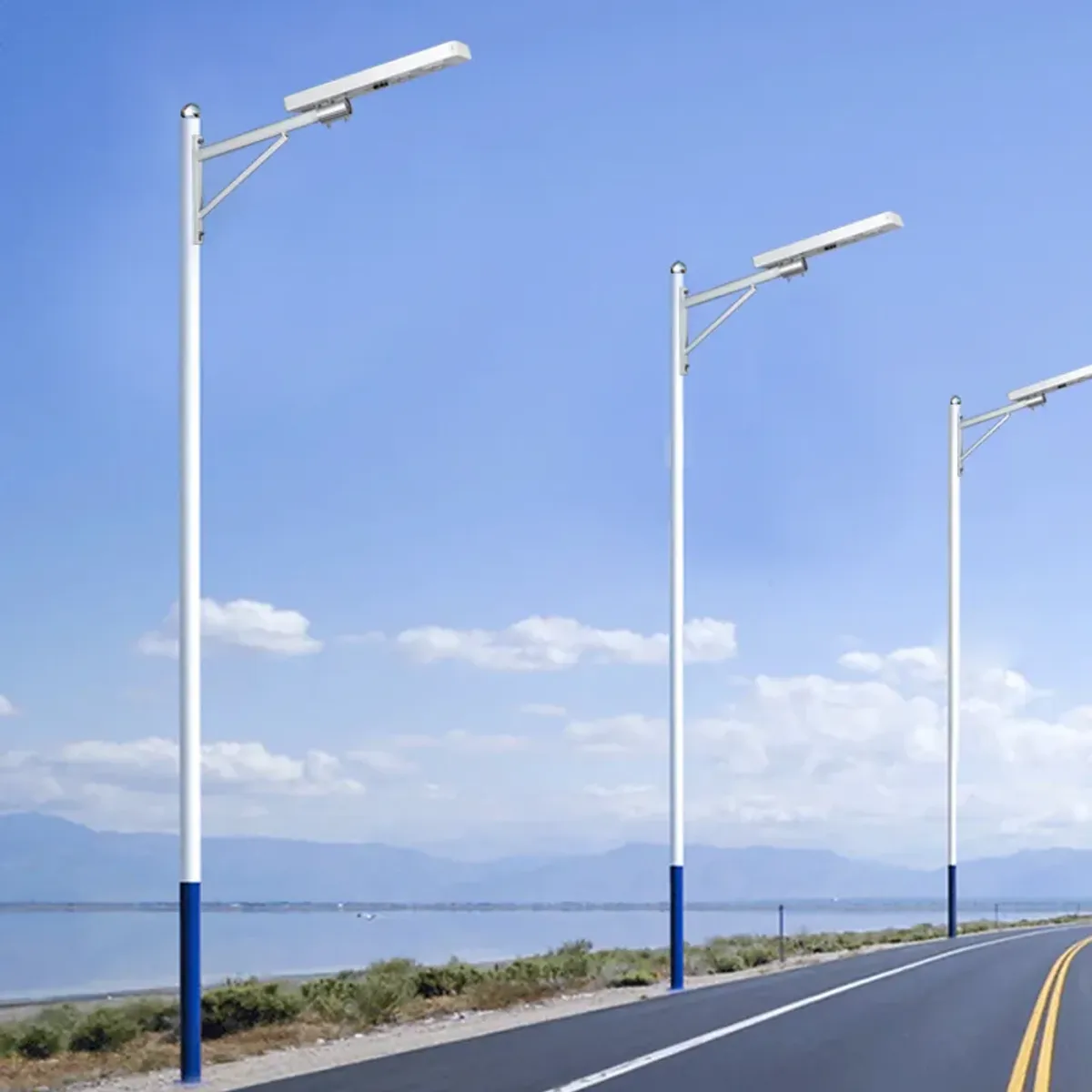
A split system separates the panel from the luminaire. The panel goes on its own bracket or on a separate mast, the battery is usually in a compartment on the pole or at the base, and a cable carries power from the panel down to the light head. That extra hardware buys you freedom in panel size, panel angle and battery capacity — and costs you installation time.
What the real numbers look like
Specification tables are where this decision is really made, so here is the actual data from our catalogue. All figures below come from the product data sheets, not from estimates.
| Model | Type | Solar panel | Battery | LED module | Install height |
|---|---|---|---|---|---|
| TR408-A | All-in-one | 15V/80W | 12.8V/30Ah | SMD 5050 96pcs | 8–10 m |
| T24 | All-in-one | 5V 80W / 18V 80W | 3.2V 75Ah / 12.8V 24Ah | SMD 3030 192pcs | 7–8 m |
| ML5T-4 | Split | 6V/120W | 3.2V/150Ah | SMD 3030 192pcs | 9–10 m |
| BY-3A | Split | 6V 150W / 6V 200W | 3.2V 150Ah / 3.2V 300Ah | SMD 5050 72pcs | 8–15 m |
| MTR-4 | Split | 36V/200W | 25.6V/60Ah | SMD 5050 96pcs | 10–15 m |
Two patterns jump out immediately, and they are the whole story.
First, split systems carry bigger batteries. BY-3A and ML5T-4 run 150Ah packs; the all-in-one TR408-A runs 30Ah and the T24 runs 24Ah. A bigger battery is the only honest way to buy more autonomy days — if your site has to ride through four or five consecutive overcast days, the split architecture gives you somewhere to put the cells.
Second, split systems reach higher. The all-in-one range tops out between 8 and 10 metres. Split models are specified from 8 up to 15 metres. Beyond roughly ten metres, the fixture weight and wind loading on a single integrated head start to work against you, and splitting the load across a panel bracket and a separate light head becomes the sensible engineering answer.
Where all-in-one wins
The integrated form factor removes whole categories of work from a project.
There is no trench, no conduit, no DC cable run, and no separate battery enclosure to secure against theft. Installation is a four-bolt job onto a standard 60mm tenon — a two-person crew can work through a street far faster than with a split system, because there is nothing to align between the panel and the head.
For community roads, residential streets, car parks, campus paths and perimeter lighting, where poles sit between 5 and 10 metres and the climate follows a normal seasonal pattern, an all-in-one is usually both cheaper to install and easier to maintain. Every fixture we ship is rated IP66 and carries the same 3-year warranty as the split range.
Where split wins
Specify split when any of the following is true:
- The pole is taller than about ten metres. The high-mast and highway end of the range lives here.
- You need genuine multi-day autonomy. 150Ah and 300Ah battery options exist in the split range; they do not in the integrated one.
- The panel needs a different angle from the head. In an all-in-one, the panel angle is fixed by the housing. If your latitude or a shading problem calls for a steeper or shallower tilt than the housing provides, only a split system can deliver it.
- The mount is not a pole. If the panel needs to go on a roof, a wall or a mast while the light head stays somewhere else, that is a split job by definition.
The trade-off is installation labour and one more set of connections to get right.
The maintenance angle nobody mentions
Battery replacement is the single biggest long-term cost in any solar street light, and the two architectures handle it differently.
On an all-in-one, the battery is inside the head. Replacing it means getting a crew and a lift to the pole, taking the fixture down, opening the housing and refitting. On a split system, the battery usually sits in a compartment a technician can reach with a ladder — or, on some pole-mounted designs, from ground level.
If your project is 200 units spread over 40 kilometres and the nearest service depot is a long drive away, this difference compounds over a fifteen-year service life. It is worth weighing before you optimise on purchase price.
A short decision rule
If you want the short version:
- Poles 5–10 m, normal climate, standard roads and car parks → all-in-one. Less to install, less to break, lower cost.
- Poles above 10 m, or 4+ days of autonomy required, or a non-pole mount → split. More hardware, more installation, but the only architecture that reaches.
If you are somewhere in the middle, the sizing worksheet walks through the arithmetic that settles it: work out the nightly energy demand first, then the battery capacity it implies, then check whether that battery fits inside an integrated housing.
Getting a recommendation for your project
Send us the road width, the pole height you are planning, and the number of consecutive overcast days the site sees, and we will come back within 24 hours with a specific model recommendation, pricing and lead time — split or all-in-one, whichever the numbers actually support.
Contact our engineering team with your project details.
Engineering and procurement team at Zhongshan Xiuben Lighting. We design, manufacture, and ship solar street lights, flood lights, and garden lights from our 12,000m² factory to 50+ countries.