
A solar street light that works perfectly on a sunny day tells you almost nothing. The real test is the third day of a cloudy stretch. If the battery runs out on day three, your road is dark, your customer is angry, and your warranty claim is on its way.
The “autonomy” or “backup days” rating of a solar street light determines how long the fixture can run on stored battery energy alone, with no sun. Most suppliers advertise “2-3 days” or “5 days” without explaining what those numbers mean in practice.
This guide explains the engineering behind autonomy, how to read between the marketing lines, and how to size the right number for your climate.
What “Autonomy Day” Actually Means
A 1-day autonomy rating means: the battery, fully charged, can power the LED at full brightness for one full night, with zero input from the solar panel.
The trap is the word “full brightness.” Most fixtures drop to 30-50% brightness in autonomy mode to stretch battery life. A fixture marketed as “3 days autonomy” but with a 30% dim profile is actually only delivering 1.5 days of useful illumination. Always ask: “Is this autonomy rating at 100% output, or at dimmed output?”
The honest spec looks like this:
- “1 night autonomy at 100% output, 3 nights at 30% standby output”
- “2 nights autonomy at 100% output, 5 nights at 50% output”
If the supplier cannot give you a full-output number, assume the autonomy rating is fiction.
The Math Behind 1 vs 2 vs 3 Days
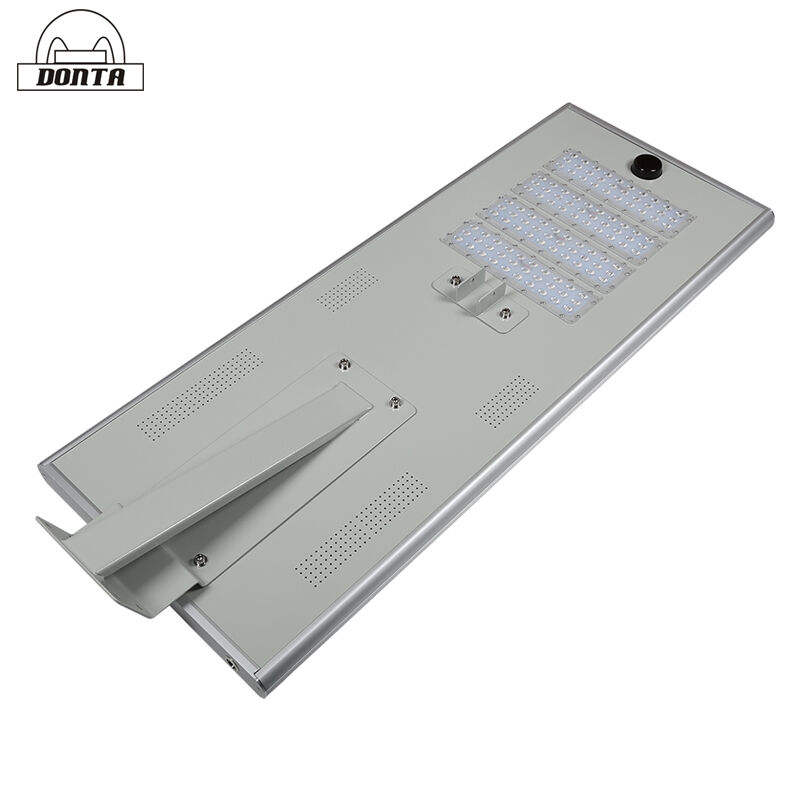
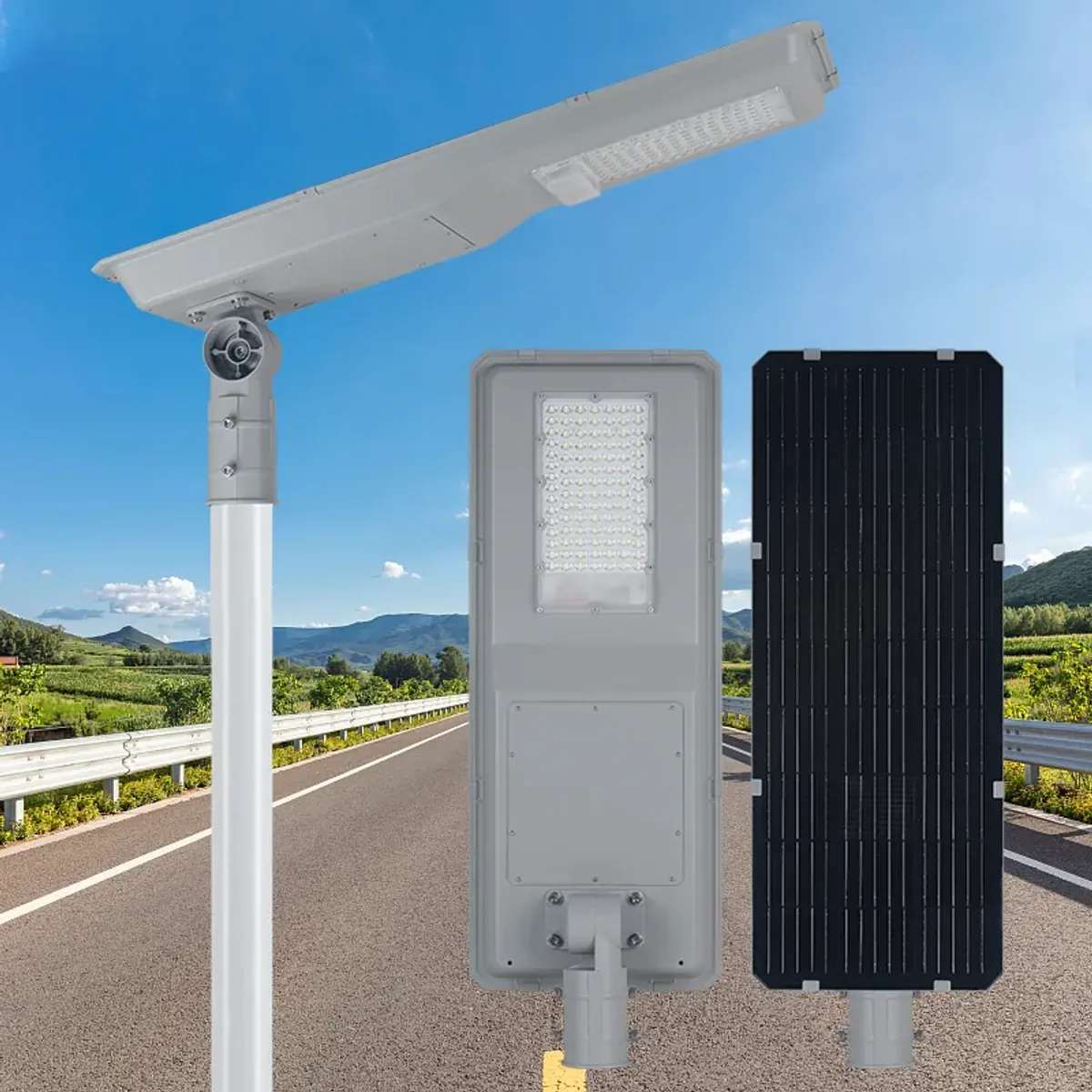
Let us work a real example. Our TR408-A all-in-one solar street light runs a 12.8V / 30Ah LiFePO4 pack:
- Nominal capacity: 12.8V × 30Ah = 384 Wh
- Usable capacity at 80% depth of discharge: ~307 Wh
- One night at 30W average draw over 10 hours: 300 Wh → about one night
- One night at 20W average draw over 10 hours: 200 Wh → roughly 1.5 nights
So a 30Ah pack on a 30W average load gives you one night of real autonomy. To get 2 nights you need roughly double the battery capacity (60Ah), which means a larger housing, a bigger solar panel to charge it, and a higher price.
This is why 100W+ all-in-one fixtures are rare. The battery size required for 2+ nights of real autonomy makes the fixture too heavy to mount on a standard pole.
Climate Map: How Many Days You Need
| Region | Cloudy streaks | Recommended autonomy |
|---|---|---|
| North Africa (Sahara edge) | 1-2 days | 1 day |
| Mediterranean | 2-3 days | 2 days |
| Sub-Saharan Africa (Sahel) | 3-5 days | 2 days |
| Equatorial West Africa | 4-7 days | 3 days |
| Southeast Asia (monsoon) | 5-10 days | 3-4 days |
| Northern Europe | 5-7 days | 3 days |
| Pacific Islands | 3-5 days | 2 days |
| Middle East (Gulf) | 1-3 days | 1-2 days |
The rule of thumb: look at your region’s worst historical 5-day stretch, and size for at least 2/3 of that. If your region has had 6 consecutive overcast days, you need 4 days of autonomy.
The Hidden Cost: Bigger Battery = Bigger Panel
This is where most buyers go wrong. They upgrade from 1-day to 3-day autonomy by doubling the battery, then wonder why the fixture under-performs.
The reason: a bigger battery takes longer to charge. If your solar panel stays the same size, the battery never fully recharges during shorter winter days. The result: the autonomy rating on paper is 3 days, but in practice you only get 2 days because the battery is at 70% when the next cloudy stretch hits.
The fix is to size the solar panel and the battery together. Solar panel wattage should be at least 1.5× the daily LED consumption, regardless of how many days of autonomy you want. For 3-day autonomy, we recommend 2× to keep the battery topped up.
For the TR348-C, the 80W panel gives roughly 1.5× headroom over the LED draw, which is the sweet spot for tropical climates with 3-day autonomy.
Motion Sensors: The Cheapest Way to Double Autonomy
Before you pay for a bigger battery, check whether the fixture has a microwave or PIR motion sensor. A motion-activated fixture drops to 30% brightness during no-activity hours and jumps to 100% when a person or vehicle approaches. The average power draw across a 12-hour night drops to 40-50% of full output.
That is the same as doubling your autonomy without adding a single cell to the battery — duty-cycled output is the cheapest autonomy upgrade there is.
What to Ask Your Supplier
Before you commit, ask these four questions in writing:
- What is the autonomy rating at 100% output, not dimmed?
- What is the usable battery capacity (Wh) at 80% depth of discharge?
- What is the solar panel wattage, and how many peak sun hours was it sized for?
- Does the fixture include a motion sensor, and what is the standby dim level?
If the answers are vague, the spec is fiction. The right supplier will give you a spreadsheet with the full energy balance calculation. We do that for every quote we send — just send us your project location and target autonomy, and we will come back the same day.
Engineering and procurement team at Zhongshan Xiuben Lighting. We design, manufacture, and ship solar street lights, flood lights, and garden lights from our 12,000m² factory to 50+ countries.