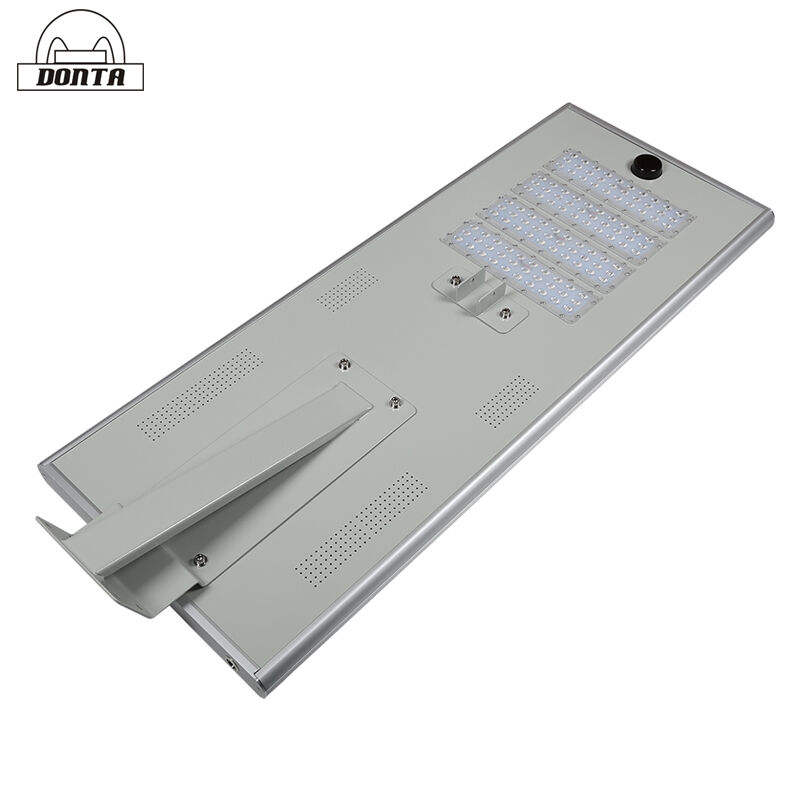

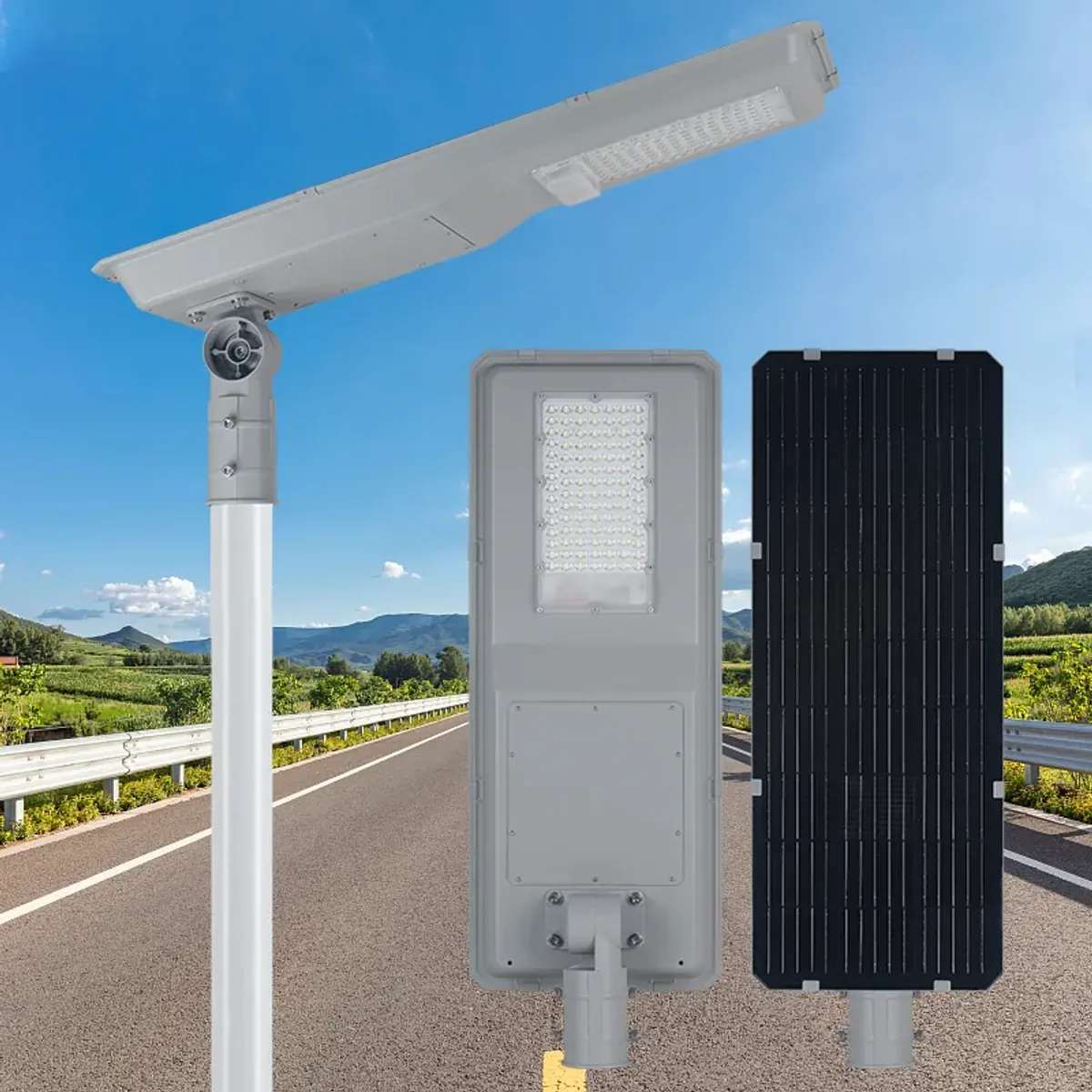
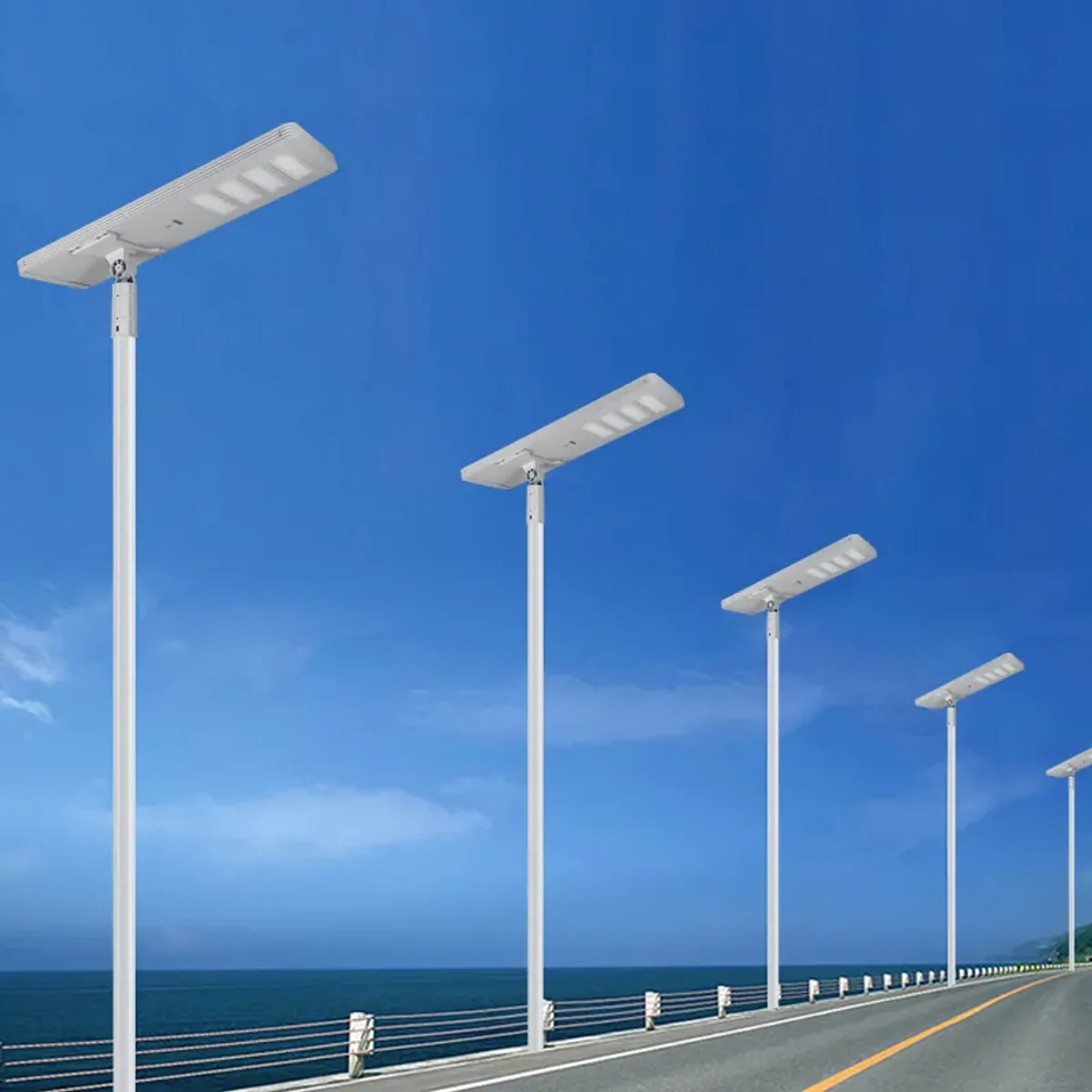
The solar street light market is roughly a $4 billion global industry, growing 15% per year. Where there is fast growth and high margins, there are also bad actors. In 14 years of manufacturing and exporting solar lights, we have seen every scam in the book — and we have heard the horror stories from buyers who fell for them.
This guide walks through the five most common scams we see targeting B2B buyers, with the specific red flags to watch for. None of this is about scaring you — it is about helping you buy from the right supplier the first time.
Scam 1: Inflated Wattage
What it looks like:
A product listing says “300W solar street light” priced at $40. The same product from a reputable supplier is $180 for a real 300W fixture. The price difference is not a bulk discount — it is a fake number.
How the scam works:
The LED chip is labeled “300W” but the actual LED is a 100W chip driven at 50% over-current. The light output looks bright in photos because the camera is set to long exposure. The fixture runs for 4-6 months at near-spec output, then the LED degrades fast because it is being run beyond its thermal design. By year one, the actual output is 30% of rated.
How to spot it:
- Ask for the lumen output, not the wattage. A real 300W LED at 170 lm/W produces 51,000 lumens. A fake 300W produces about 18,000 lumens.
- Ask for the IES file (the photometric data file). Reputable manufacturers can produce one. Fake ones cannot.
- Check the LED chip brand on the spec sheet. A real 300W fixture from a name-brand supplier uses a Philips, Bridgelux, or Osram chip. Unmarked or no-name chips are a red flag.
- Ask for a lux measurement at 6 meters. A real 300W fixture produces 30+ lux at the ground. A fake one produces 8-12 lux.
The honest test: if the price per watt is under $0.50 for a 100W+ all-in-one fixture, walk away. Real 100W all-in-ones with 100W panels and 50Ah batteries cost $150-200 to manufacture. Anything below that is cutting corners.
Scam 2: Recycled 18650 Lithium-Ion Cells
What it looks like:
The battery spec says “LiFePO4” or “lithium battery” with a high cycle life (2,000+ cycles) at a price that seems too good.
How the scam works:
The battery is actually a pack of recycled 18650 lithium-ion cells harvested from old laptop batteries or e-bike packs. The cells are tested and matched to look good on the spec sheet, but their actual capacity is 40-60% of new cells. The cycle life is 200-400 cycles, not 2,000. Within 12-18 months, the battery capacity drops to 50% and the runtime collapses to 4-5 hours per night.
How to spot it:
- Ask for the cell brand and model number (not just “LiFePO4”). Real cells come from CATL, EVE, CALB, or similar tier-1 suppliers. The cell datasheet is a public document the manufacturer can send you.
- Ask for a factory audit report showing the battery production line. If the supplier cannot show a battery production line, they are buying cells and assembling packs (still legitimate) but they should be transparent about which cells.
- Ask for the battery test report from a cycle tester. A new LiFePO4 cell tested at 1C charge/discharge should deliver ≥2,000 cycles at 80% capacity retention. Recycled cells will show 400-600 cycles max.
- Check the battery management system (BMS) brand. A reputable supplier uses a BMS from a known manufacturer (like Daly or JBD). No-name BMS is a red flag.
The honest test: if the battery cost is under $30 per kWh, you are looking at recycled cells or a fake spec. Real LiFePO4 cells in 2026 cost $80-120 per kWh at the cell level.
Scam 3: Photoshopped Certificates
What it looks like:
The product listing shows CE, RoHS, ISO 9001, FCC, and 6 other certificates. The supplier sends you PDF copies when you ask.
How the scam works:
Many of the certificates are either photoshopped, expired, or issued for a completely different product. The supplier gets one fixture tested and certified, then re-uses the certificate for 10 different products that were never tested.
How to spot it:
- Every legitimate certificate has a unique certificate number. Look it up on the issuing body’s website (TUV, SGS, BV, Intertek, DEKRA).
- The certificate has an expiry date. If the supplier sends you a certificate from 2019 with no expiry, ask for the current one.
- The certificate names a specific product model. If the model number on the certificate does not match the product you are buying, the certificate is decorative.
- CE certificates for solar lights must include the EMC and LVD directives (electromagnetic compatibility and low voltage). A CE certificate with only the “general” mark is suspicious.
The honest test: pay for a pre-shipment inspection by a third-party company like SGS or Bureau Veritas. The cost is $300-500 per shipment and it catches 95% of these issues.
Scam 4: Mislabeled Solar Panel Wattage
What it looks like:
The spec says “100W solar panel” but the panel is physically 50W.
How the scam works:
A 50W mono panel and a 100W mono panel look almost identical at a glance, but the 100W panel has 4× the cell count and a 60% larger footprint. The supplier labels the 50W panel as 100W to win the spec war against competitors. The real-world consequence: the battery never fully charges, the autonomy claim is fiction, and the customer blames the whole industry for “solar not working.”
How to spot it:
- Check the panel dimensions against the manufacturer datasheet. A 100W mono panel is approximately 1,000 × 670 mm. A 50W is 700 × 550 mm. If the actual panel is 30% smaller than the datasheet, it is under-spec.
- Ask for the open-circuit voltage (Voc) and short-circuit current (Isc). A real 100W panel has Voc around 22V and Isc around 5.5-6A. A 50W has Voc 18V and Isc 3A.
- Ask for a flash test report for the specific panel you are buying (not a sample test). Every panel manufacturer runs every panel through a flash tester at the factory.
- If the supplier cannot provide the panel brand and model number, the panel is almost certainly a no-name reject.
The honest test: request a sample with a calibrated solar irradiance meter, charge the fixture for 3 days, and measure the actual kWh harvested. It is a 30-minute test that catches every solar panel scam.
Scam 5: “Factory Direct” That Is Actually a Trading Company
What it looks like:
The supplier says “we are the factory, 14 years experience, 9,000 m² workshop.” Their website shows impressive photos.
How the scam works:
Many “factories” on Alibaba are actually trading companies that rent warehouse space and pose as manufacturers. They source from 3-4 different actual factories, mix and match components, and re-sell. The quality is unpredictable because no one supplier is accountable for the full build.
How to spot it:
- Ask for a video call factory tour. A real factory will show you the production line, the workers, the testing lab. A trading company will make excuses.
- Ask for the factory business license and the land use certificate. The land certificate shows the actual property owner.
- Look at the company registration date on the business license. If the “factory” claims 14 years of experience but the business license is 2 years old, the company was re-registered for tax or branding reasons (common in China but a red flag).
- Visit the factory in person if the order is over $50,000. A real manufacturer will welcome the visit and pick you up from the airport.
- Check the export history on the business license. Real manufacturers have 50+ export records. Trading companies have 1-3.
The honest test: ask for the names of 3 long-term customers in your country, then call them. A real manufacturer will have customers willing to vouch for them. A trading company will not.
How to Protect Yourself
- Pay 30% deposit, 70% on inspection. Never 100% upfront.
- Use a third-party inspection (SGS, BV, TUV) for orders over $10,000.
- Get samples before bulk orders. A supplier who refuses samples is hiding something.
- Verify certificates by their unique number on the issuing body’s website.
- Use trade assurance (Alibaba) or escrow for first orders.
- Ask for the cell brand and BMS model — this is the most predictive indicator of long-term quality.
- Read the warranty carefully. A 1-year warranty on a “5-year lifespan” product is a red flag.
How Xiuben Handles This
We have been manufacturing solar street lights in Zhongshan since 2012. Our full chain of evidence:
- Land certificate: 9,000 m² in Guzhen, Zhongshan
- Business license: registration #91442000MA4UR7J87A, since 2012
- Export records: 50+ countries, 1,200+ shipments
- Cell suppliers: CATL and EVE (we send the cell test report with every order)
- BMS supplier: Daly and JBD (brand and model on the spec sheet)
- LED chips: Philips Lumileds and Bridgelux (with supplier code on the label)
- Test reports: 30+ certificates, all current and verifiable
Request our factory tour video and our quality control documentation before you place an order.
Engineering and procurement team at Zhongshan Xiuben Lighting. We design, manufacture, and ship solar street lights, flood lights, and garden lights from our 12,000m² factory to 50+ countries.