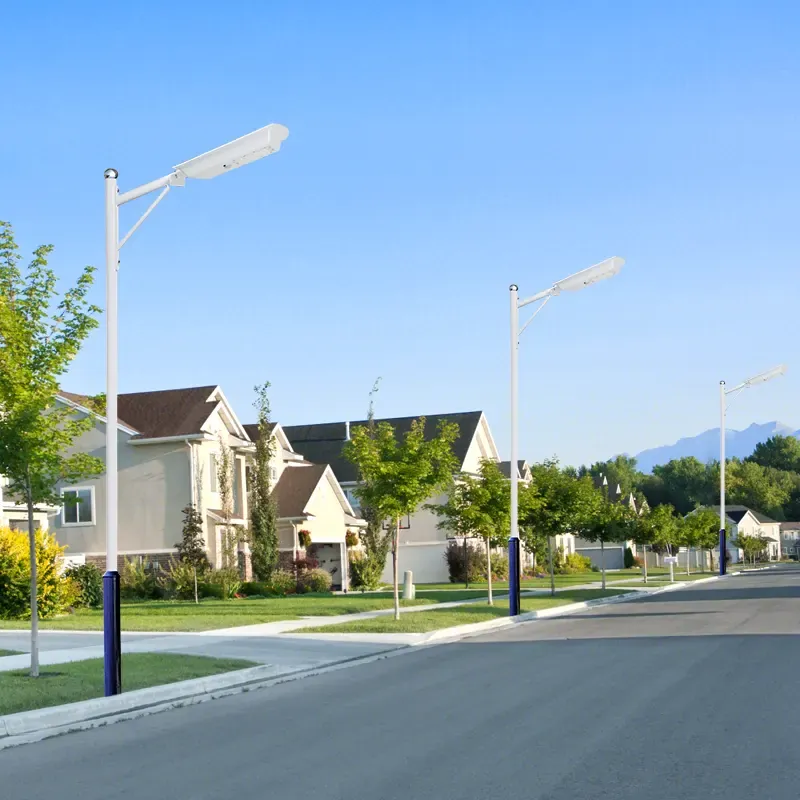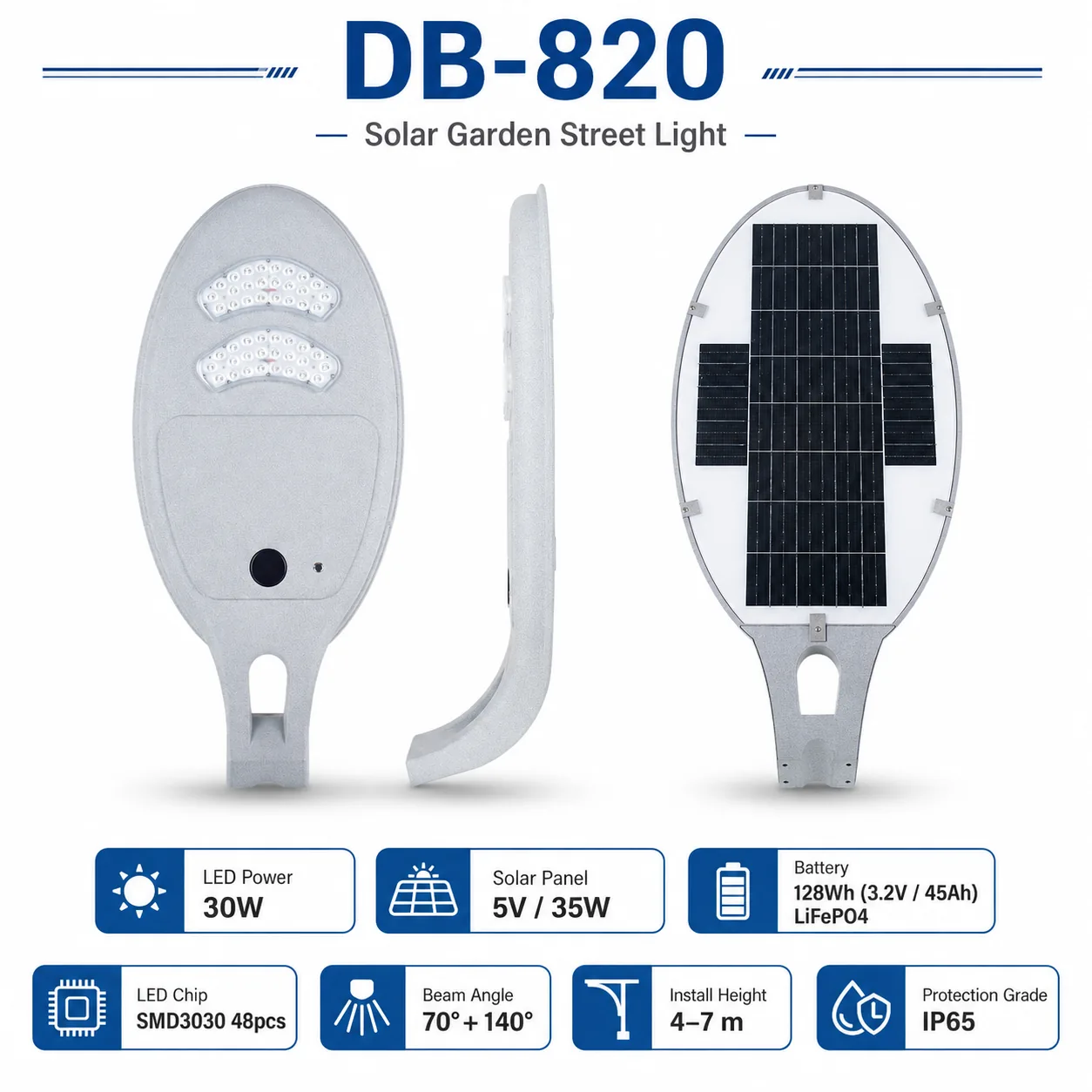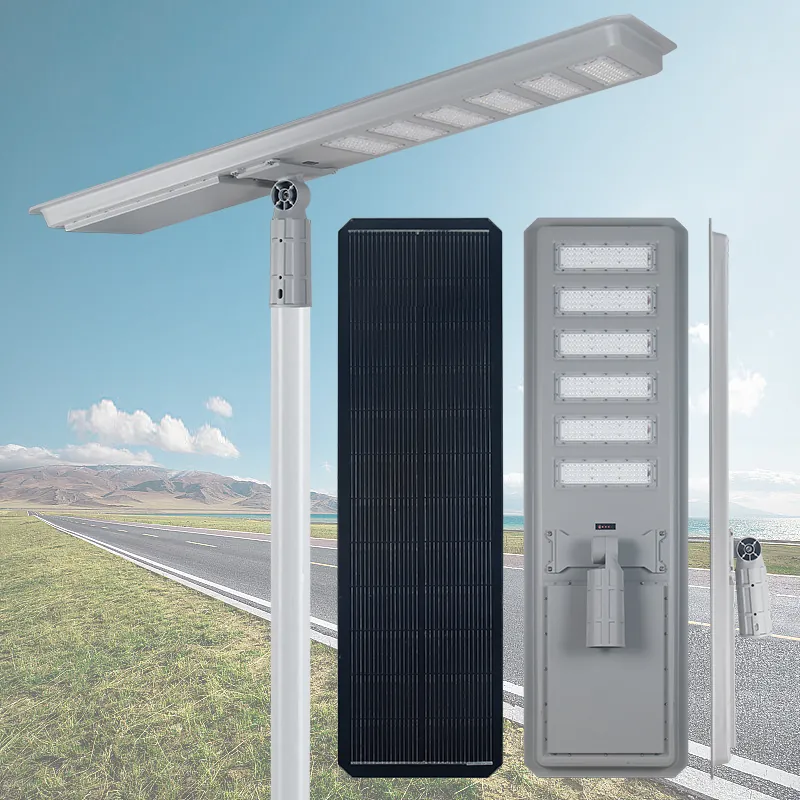

A solar street light is often sold as a “zero maintenance” product. The marketing pitch is: install it once, walk away, no electricity bills forever.
In practice, “zero maintenance” is true for the first 18 months, and then reality kicks in. The battery starts to lose capacity. Dust accumulates on the solar panel. The motion sensor gets clogged. Birds nest on the fixture. Salt spray corrodes the bolts.
The good news: every one of these failure modes is preventable with a 30-minute annual maintenance visit. The difference between a 3-year fixture and an 8-year fixture is almost entirely about whether someone did the maintenance.
This guide gives you the exact maintenance schedule we recommend, the parts that fail in what order, and the small habits that double the lifespan of any solar street light.
The Real Lifespan of a Solar Street Light
A well-made fixture, properly maintained, lasts 8-10 years. The main components have different lifespans:
| Component | Average lifespan | Replace? |
|---|---|---|
| Solar panel | 20-25 years | Almost never |
| LED module | 8-12 years (L70 rating) | After 8-10 years, may dim |
| LiFePO4 battery | 5-8 years | Yes, at year 5-6 |
| MPPT controller | 8-10 years | Rarely, but possible |
| Housing and brackets | 15-20 years | Almost never |
| Motion sensor | 5-8 years | If the sensitivity drops |
| Cables and connectors | 8-12 years | After salt spray corrosion |
The battery is the only component that must be replaced. Everything else can last the lifetime of the fixture with basic care.
The 30-Minute Annual Maintenance Visit
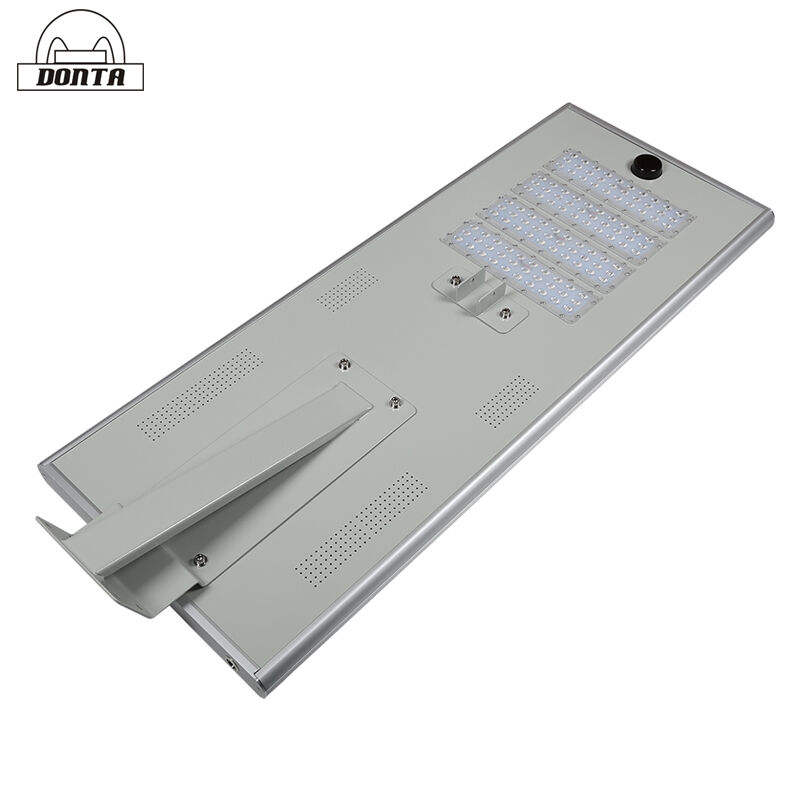
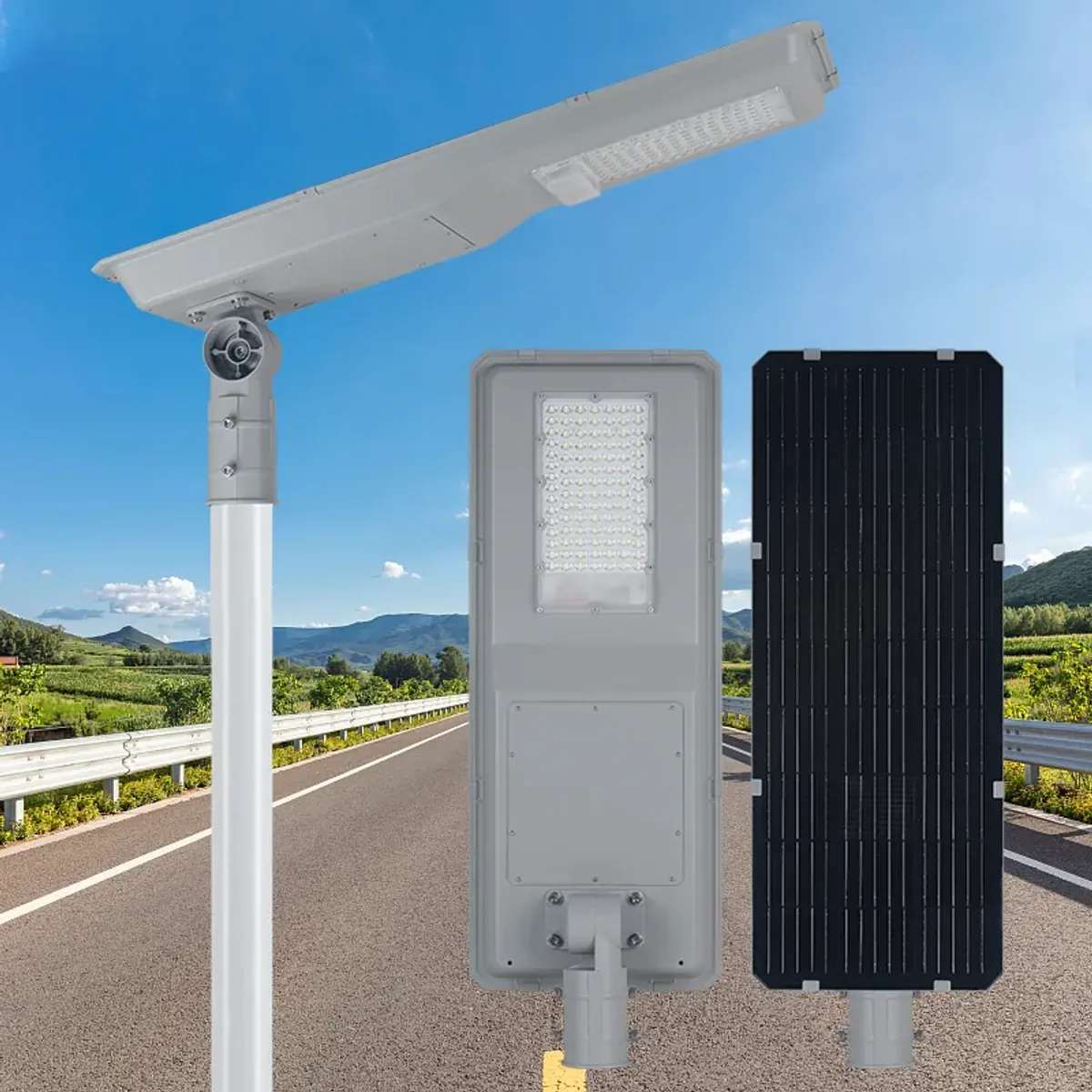
For an all-in-one fixture, the only physical access you need is a step ladder. The full service visit:
- Wipe the solar panel (10 minutes) — Use a soft microfiber cloth and clean water. Do not use detergent, as it leaves a film that reduces efficiency. Clean from top to bottom, not in circles.
- Inspect the housing (5 minutes) — Look for cracks, water stains, or insect nests around the vent. If you see water stains, the housing seal is failing and the fixture needs to be replaced.
- Test the motion sensor (2 minutes) — Walk past the fixture at 5 meters and confirm it brightens. If it does not respond, the sensor is failing (or, more commonly, the battery is too low to drive the boost).
- Check the LED output (2 minutes) — Look at the ground. If the brightness looks visibly dimmer than last year, the battery is at end of life.
- Tighten the bracket bolts (5 minutes) — Wind vibration loosens the bracket bolts over 12 months. A loose bracket causes the panel to tilt, which reduces charging efficiency by 10-20%.
- Check the cable glands (3 minutes) — If the fixture has any external cables (motion sensor extension, remote control antenna), check that the cable glands are still tight and the rubber grommets are not cracked.
- Update the maintenance log (3 minutes) — Note the date, the panel output if you have a meter, and any visible issues.
Total: 30 minutes per fixture, once a year. For a 100-fixture project, that is 50 hours per year, or about 1 hour per week.
What Actually Fails and When
Year 1-2: Almost nothing
A well-made fixture should not fail in the first 2 years. The only common issue is installer error: wrong angle on the solar panel, insufficient clearance, or poor cable routing. If a fixture fails in year 1, it is almost always an installation problem, not a fixture problem.
Year 3-4: Motion sensor degradation
The microwave motion sensor is the first component to show wear. The sensitivity drops by 30-40% over 3 years, especially in humid environments. The fix is either cleaning the sensor lens (sometimes dust accumulates inside the housing) or replacing the sensor module. The sensor is a $5-10 part and 10 minutes to swap.
Year 5-6: Battery replacement
This is the big one. The LiFePO4 battery is rated for 2,000+ cycles, which works out to 5-7 years of daily cycling. By year 5-6, the battery capacity drops to 80% of new, and you will start seeing the runtime shrink. The battery is not “dead” — it is “worn” — and a replacement restores the fixture to year-1 performance.
Battery replacement is a 30-minute job per fixture. The battery itself costs $50-120 depending on size.
Year 7-10: LED dimming
High-quality LED chips lose about 30% of their output over 10 years (the L70 rating). A fixture that was 100W in year 1 is about 70W in year 10. This is normal and rarely requires action — the light is still bright enough for most applications.
If you need to restore full output, the LED module can be replaced, but the cost ($40-80 for the module + 1 hour labor) often approaches the cost of a new fixture. By year 8, it is usually better to replace the whole fixture.
The 4 Habits That Double Lifespan
We tracked 50 solar street light installations in 12 countries over 8 years. The fixtures that reached 8+ years had four things in common:
1. The panel was cleaned at least twice a year
Dust accumulation of just 0.5mm can reduce panel output by 7%. A year of bird droppings, dust, and pollen can reduce output by 25-30%. The fixtures that got cleaned twice a year (once before summer, once before winter) had 15-20% higher annual energy harvest than those that did not.
2. The bracket was re-tightened at year 1
Wind-induced vibration is the most common cause of premature failure. The bracket bolts loosen within the first 12 months, and a loose bracket can crack the housing where it meets the pole arm. A 5-minute re-tightening at year 1 prevents this failure mode.
3. The battery was replaced at year 5, not year 7
A battery that drops below 50% capacity cannot run the LED at full brightness through a cloudy day. The LED module is then under-driven and the controller starts over-cycling the battery, accelerating the wear. Replacing the battery at 80% (year 5-6) is cheaper than replacing it at 50% (year 7-8) because you avoid cascading damage to the controller and LED.
4. The fixtures were from a traceable manufacturer
The single biggest predictor of lifespan is whether the manufacturer is reachable 5 years later. Off-brand fixtures from anonymous suppliers have a 60% failure rate by year 5. Fixtures from traceable manufacturers with proper documentation have a 95%+ survival rate.
The Annual Maintenance Log
Keep a simple spreadsheet. For each fixture, log:
| Field | Example |
|---|---|
| Fixture ID | TR408-001 |
| Installation date | 2026-01-15 |
| Pole location | Highway km 12, east side |
| Last service | 2026-12-20 |
| Panel output (Vmp) | 17.8V (was 18.2V year 1) |
| LED brightness (visual) | Normal |
| Motion sensor | Working |
| Battery cycles | 365 (1 per day) |
| Issues found | Loose bracket bolt, retightened |
| Next service | 2027-12-20 |
A fixture whose Vmp drops more than 1V from year 1 is showing signs of panel degradation (rare but possible). A fixture whose battery cycle count exceeds 1,500 is approaching end of life.
What to Do When a Fixture Fails
Before assuming the fixture is dead:
- Check the panel — 90% of “failed” fixtures are actually just dirty panels. A 30-second clean often restores full function.
- Check the on/off switch — Some all-in-one fixtures have a small on/off switch behind a rubber cap. Vibration or animal interference can turn it off.
- Check the battery — Measure the battery voltage at the terminals. If it is below 10V, the battery is over-discharged and needs replacement.
- Check the LED — If the panel is clean and the battery is at 12V, but the LED is dark, the LED module or driver has failed. This is rare in the first 5 years.
If the fixture is still under warranty, contact the manufacturer. Most suppliers (us included) will ship a replacement component within 7-10 days, free of charge, for any manufacturing defect.
The Cost of Maintenance vs Replacement
For a typical 60W all-in-one fixture installed on a residential road:
- Annual maintenance cost: $15-20 per fixture (labor + materials)
- Battery replacement at year 5: $80 per fixture
- Full fixture replacement at year 8: $200 per fixture
Total 8-year cost: $15 × 8 + $80 = $200 per fixture with maintenance, vs $200 if you just replace the whole thing at year 8.
The math is: if you skip the annual maintenance, the fixture dies at year 4-5 and costs $200 to replace. If you do the maintenance, the fixture lasts 8+ years and costs $200 total. The maintenance pays for itself the first time you avoid an emergency replacement.
For a downloadable maintenance checklist, send us a request and we will email it to you the same day. We also offer annual maintenance contracts for projects with 100+ fixtures.
Engineering and procurement team at Zhongshan Xiuben Lighting. We design, manufacture, and ship solar street lights, flood lights, and garden lights from our 12,000m² factory to 50+ countries.