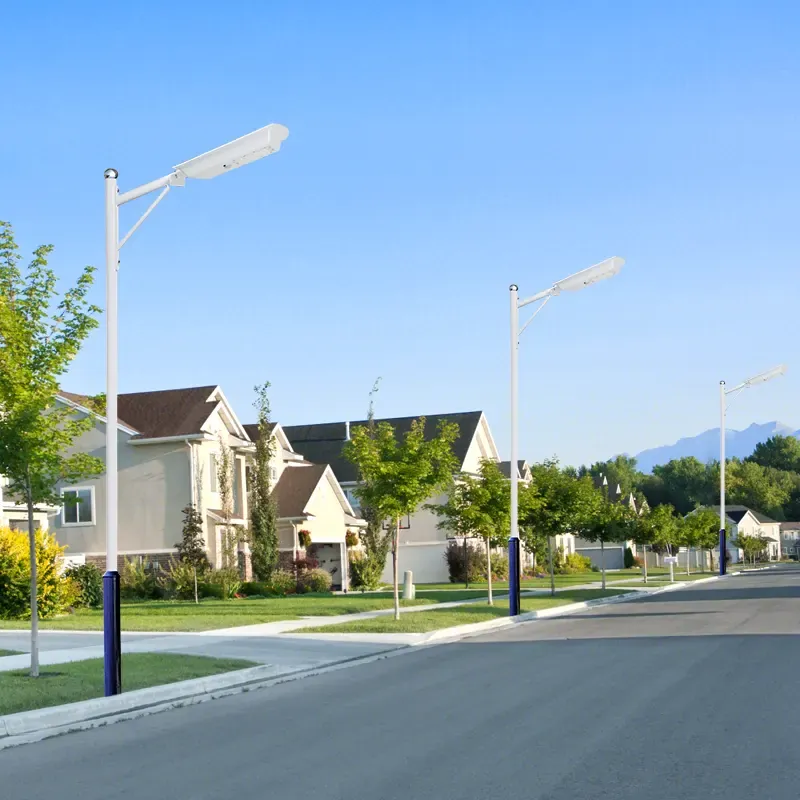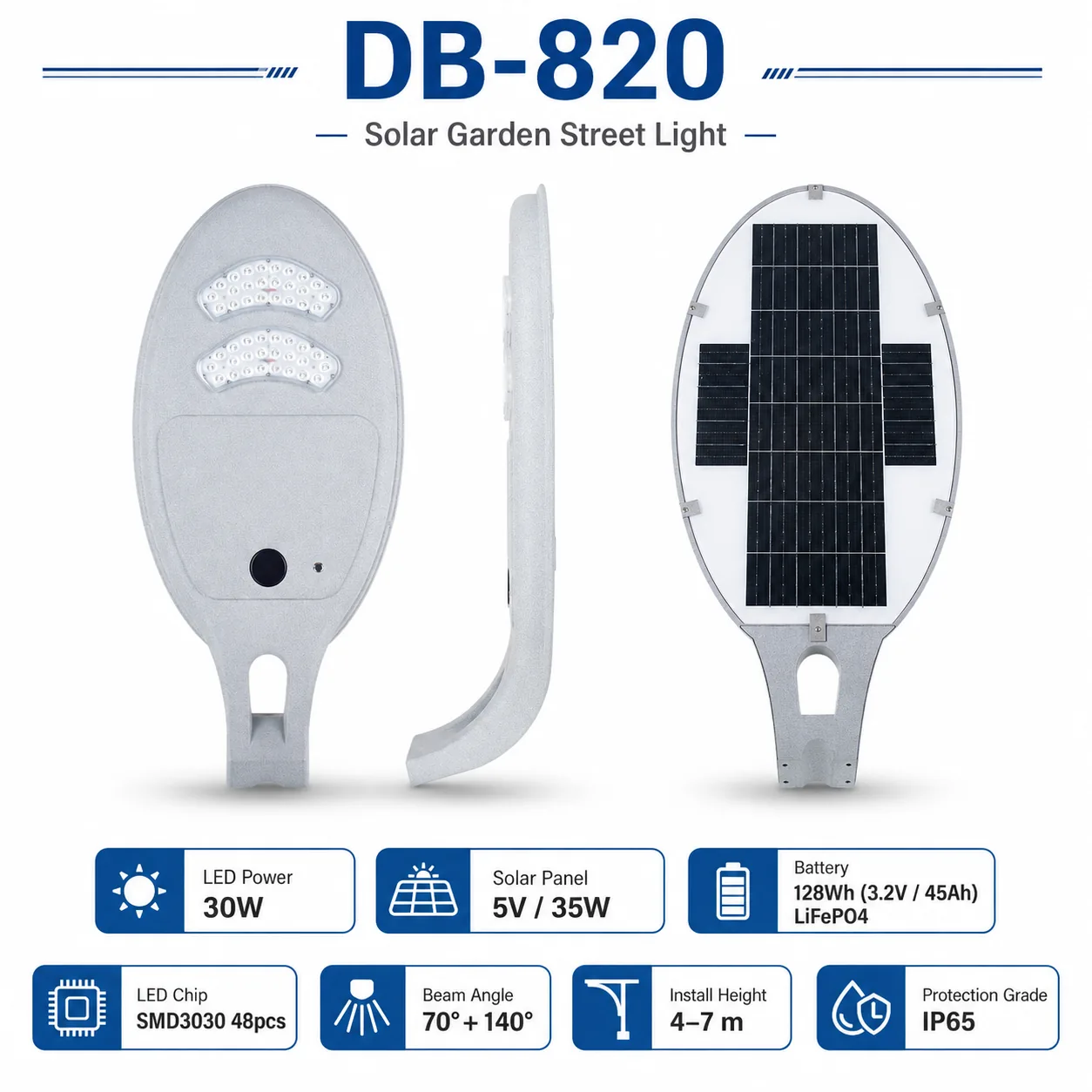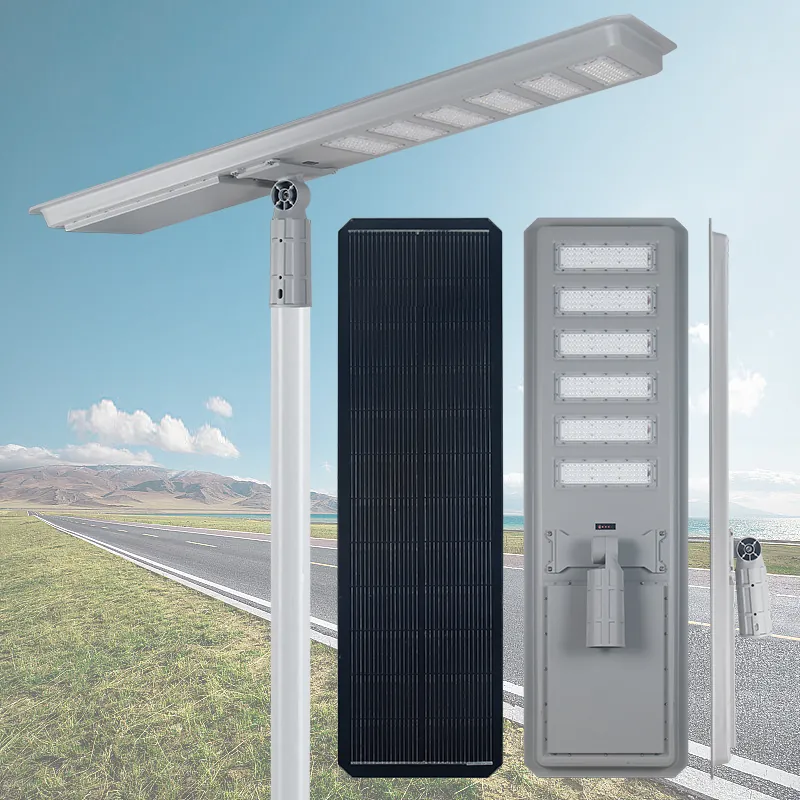

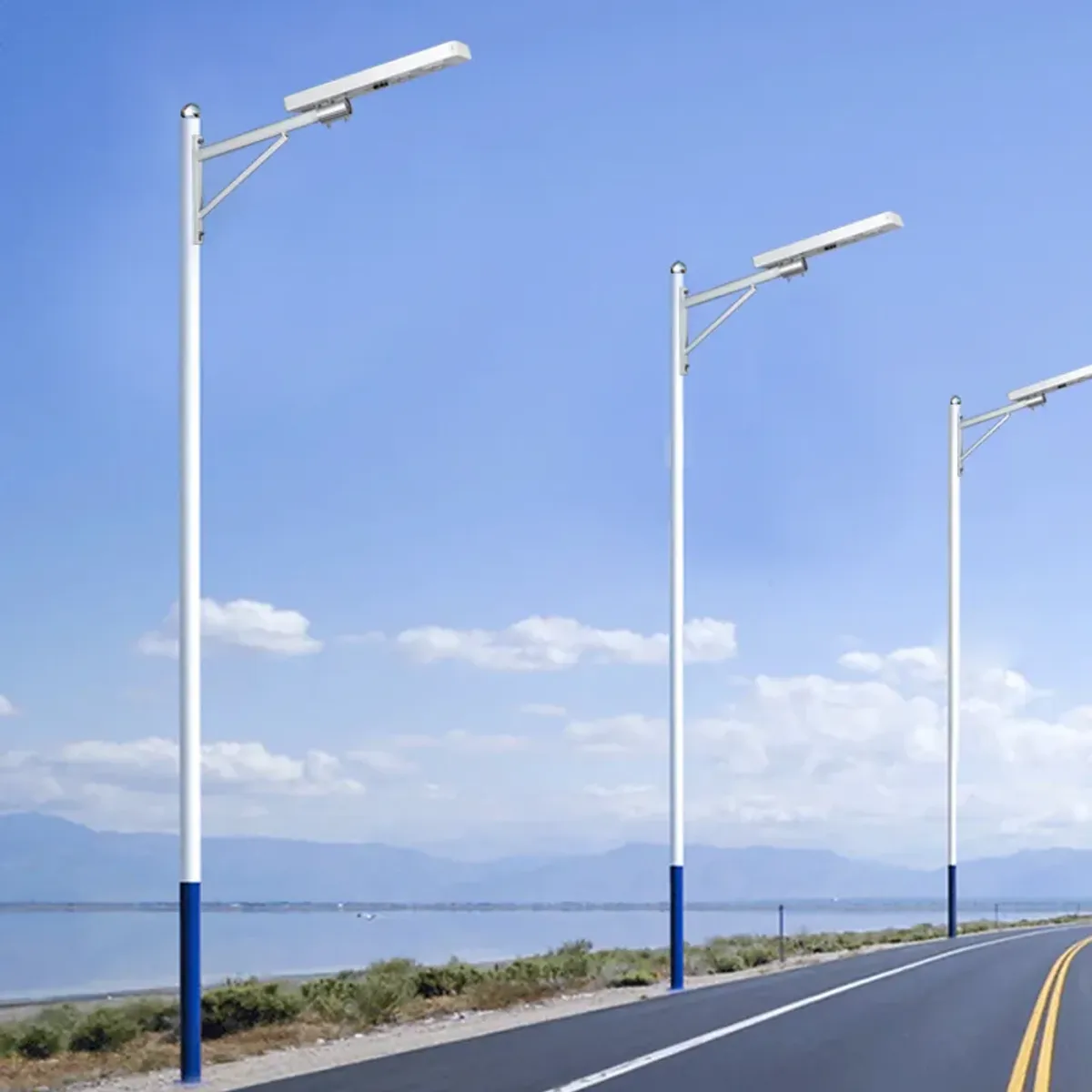
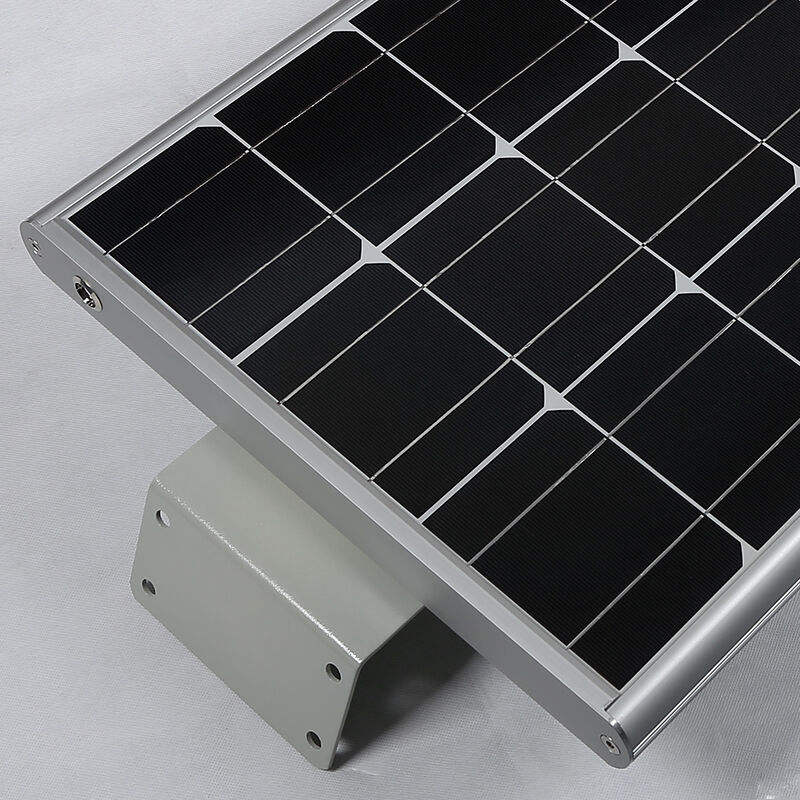
Picking the right solar street light is not just about wattage. The right fixture depends on the pole height, the spacing between poles, the autonomy days you need through cloudy weather, and whether your site is shaded.
This guide walks through the decisions in the order they actually matter.
Step 1: Measure the Road, Not the Lamp
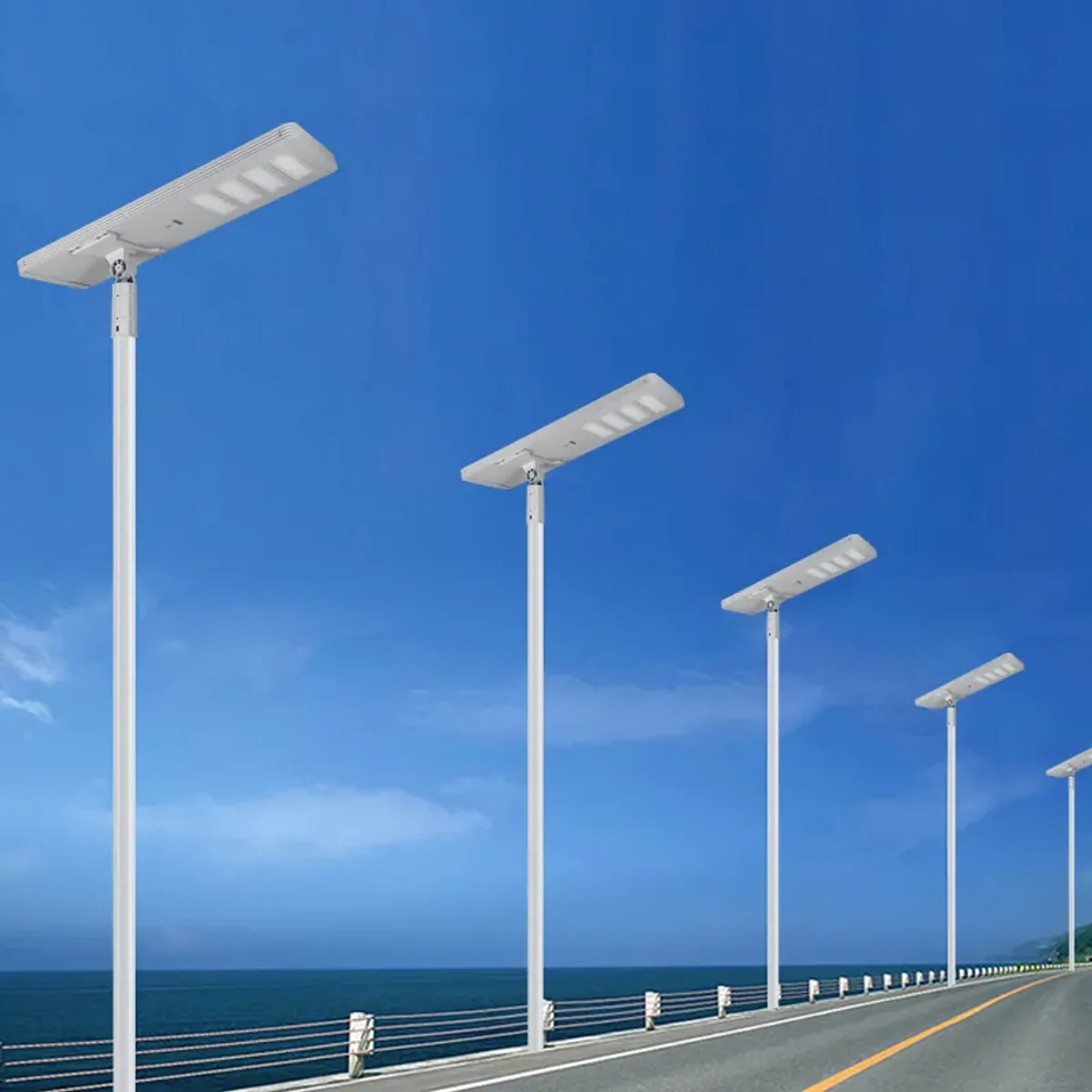
The first question is how wide is the road you are lighting? That decides the pole height and the spacing, which together decide the wattage.
| Road type | Pole height | Pole spacing | Recommended wattage |
|---|---|---|---|
| Residential street | 6-7 m | 18-22 m | 30-60W |
| Side road | 7-8 m | 20-25 m | 60W |
| Main road, two lanes | 8-10 m | 25-30 m | 80-100W |
| Highway, four lanes | 10-12 m | 30-35 m | 120-150W |
| Square / parking lot | 8-10 m | (area-based) | 100-200W flood |
Common mistake: customers send us “I want 200W street lights” without telling us the road width. A 200W fixture on a 6m pole just wastes light into the sky and overdrives the battery.
Step 2: Decide All-in-One vs Split
| Factor | All-in-One | Split |
|---|---|---|
| Installation | One piece, 20 min | Two pieces, 1-2 hours |
| Shaded sites | Bad — panel must be on top | Good — panel can be remote |
| Maintenance | Replace whole fixture | Replace just the panel/battery |
| Cost per unit | Lower | Higher |
| Aesthetic | Compact, modern | Bulky, more “industrial” |
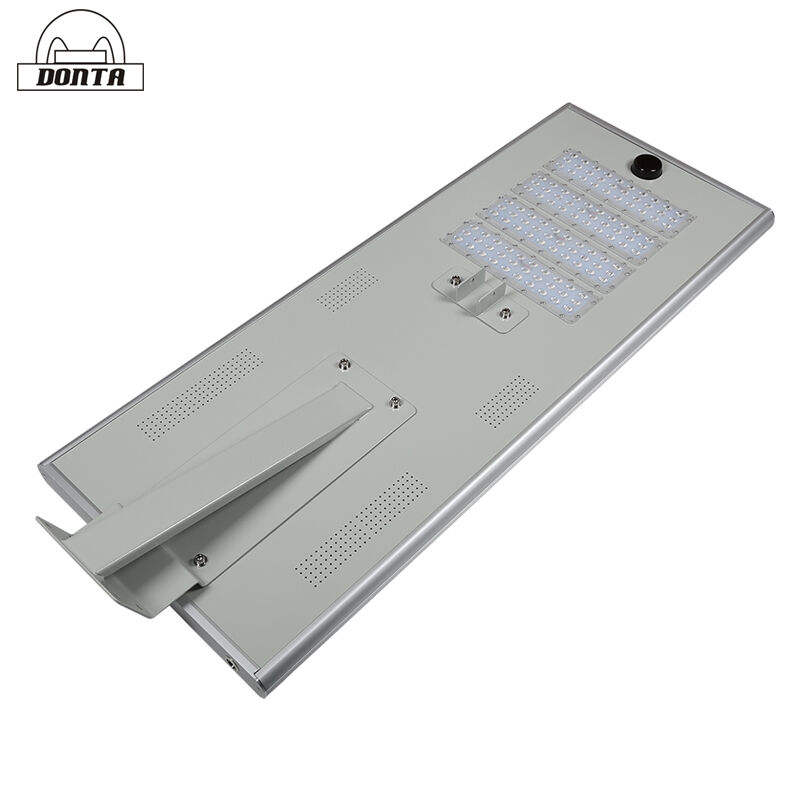
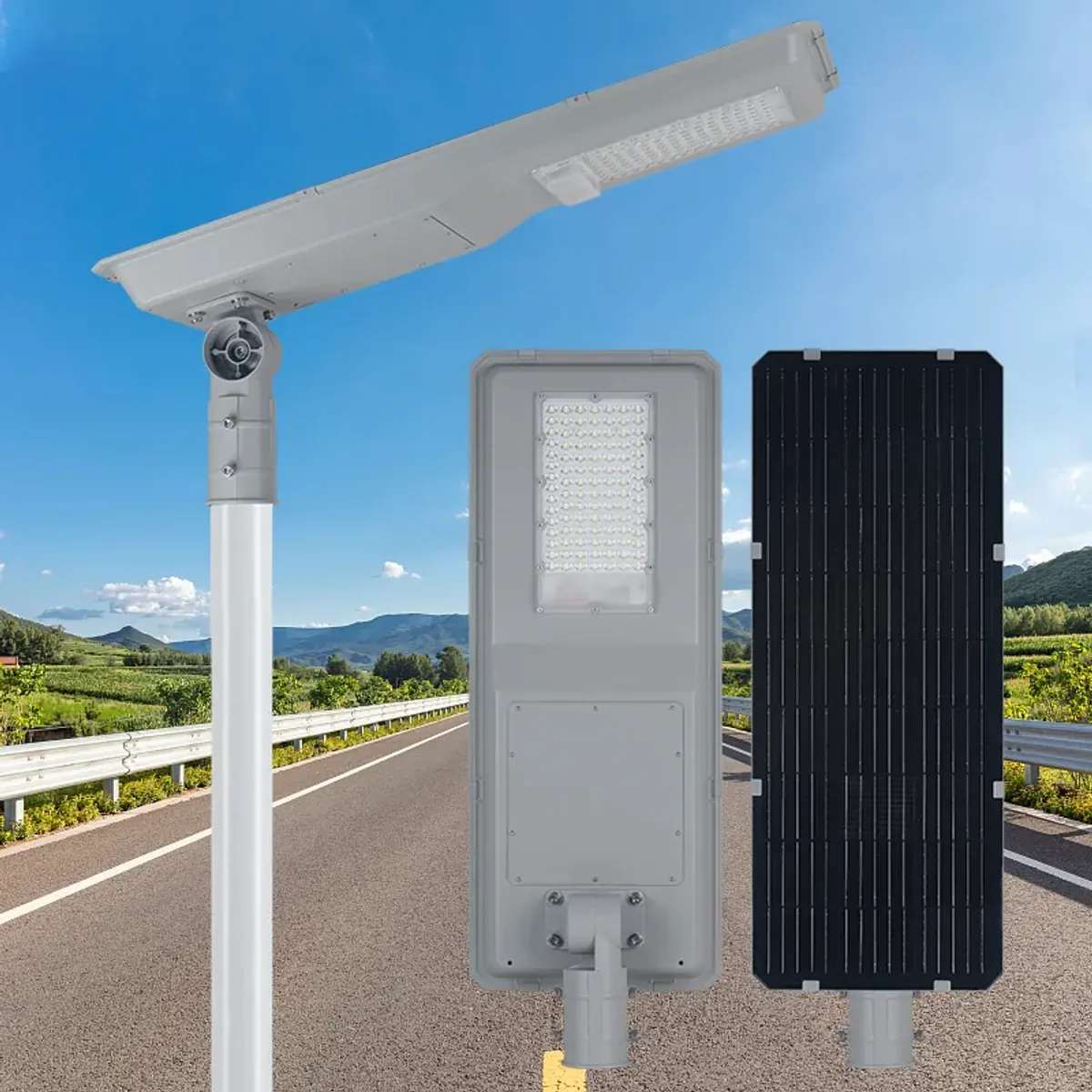
For 90% of road-lighting projects, all-in-one is the right answer. The split design earns its premium when the installation site is heavily shaded, or when the pole top is too small to host the panel.
Step 3: Pick the Battery
The battery is the most expensive part of the fixture and the part that fails first if you cheap out.
- Lead-acid: 30% cheaper up front, but 300-500 cycles. The light will start dimming noticeably after 18 months.
- LiFePO4: 2000+ cycles, 5+ year life. Pays for itself by year 2.
We only sell LiFePO4. The unit cost is higher, but the lifetime cost is lower.
Step 4: How Many Backup Days?
“Backup days” = how many consecutive cloudy/rainy days the light can run before the battery is empty.
- 3 days: standard for most projects. Handles a normal rainy week with sun between.
- 5 days: needed for equatorial rainforest sites with sustained cloud cover.
- 7+ days: overkill unless you have a very specific reliability requirement — usually means oversizing the panel and battery, which adds cost.
Step 5: Verify the Certifications
For B2B sales, especially to governments and large contractors, ask for:
- CE (mandatory for EU and most of Africa / Middle East)
- RoHS (mandatory for EU)
- IP66 (not IP65 — IP65 only handles rain, not heavy storms)
- ISO 9001 (the factory has a real quality system, not a trading company)
PDF certificates should be dated within the last 2 years.
What’s Next?
If you have a project, send us the road width, the pole height you are planning, and the typical weather in your area. We will quote a fixture, a panel sizing, and a battery sizing that actually fits your site.
Engineering and procurement team at Zhongshan Xiuben Lighting. We design, manufacture, and ship solar street lights, flood lights, and garden lights from our 12,000m² factory to 50+ countries.